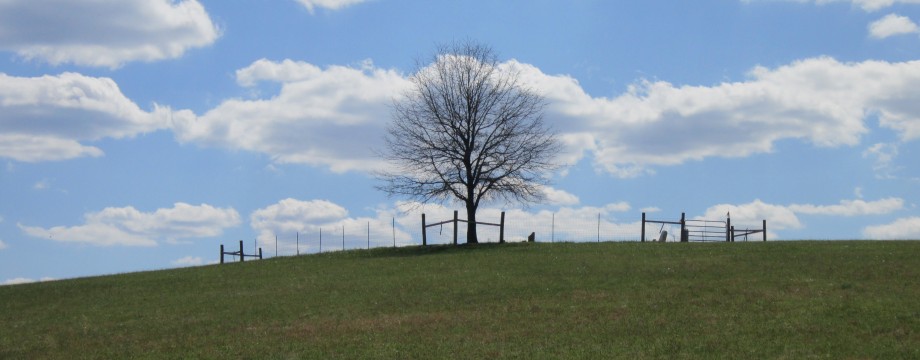
Freedom. Noun. The state of being free or at liberty rather than in confinement or under physical restraint. Or, exemption from external control, interference, regulation, etc. What do you think of when you hear the word “Freedom”? For me, I immediately think of William Wallace, as portrayed by Mel Gibson in Braveheart, as he yells “Freeeeeedooooooom” before being executed, fighting for Scottish independence and refusing, even with his last breath, to give in to tyranny. From this story, there is a strong connection to Freedom, but what does it mean to you? J and I had the opportunity to walk on hallowed ground, where some of the major beginnings of our country first took root. Read along, as you hear of people that you know and others that you don’t (along with my own personal twist on our journey, of course).
A notable Patriot was born October 30, 1735. As a lawyer, he decided to take on the case for the British soldiers who fired on colonials during the “Boston Massacre”. 6 out of 8 were acquitted. Nominated George Washington to be Commander-In-Chief (turned out to be a good move, wouldn’t you say?). Later nominated John Marshall as Chief Justice (another good move). Assisted Thomas Jefferson in writing the Declaration of Independence (seriously, does this get better?). First Vice President of the United States (yes, it does get better). Second President of the United States (okay, this resume is crazy good). Died July 4, 1826 (the Fourth of July! Awesome). His last words were, “Thomas Jefferson still survives.” Welllll not quite, Jefferson died the same day, just 5 hours earlier. I could tell you about the story of his birthplace, or the house next door where his son was born (later another U.S. President), but the main location for this part of our journey was at Peacefield, near current day Quincy, MA. The house is majestic, construction started on the oldest part in 1731. I could tell you about the Yorkist Rose Tree planted by Abigail in 1788 (roses have come up every year since), or the majestic library in the back of the house that contains some of the oldest volumes in our country’s young history. I could tell you about the “1790 portrait of George Washington that John thought looked the most like George” hanging in the dining room, or the original copy of the Declaration of Independence hanging on the wall. I could tell you about how each room was decorated, painted, and constructed of the finest materials. What I will tell you about is the woman who guided J and me through the house and gardens of John & Abigail Adams. Every room we walked into, you felt as though you were walking in the 18th and 19th centuries as her intricate details brought the story to life. Her enthusiasm was contagious as everyone on the tour hung on each word in every room. She knew everything about the house and the people who lived there for generations. I wasn’t the only one in tears when I saw the copy of the Declaration (okay, maybe I was the only one who was literally teary-eyed, but not by much). As we walked through the house, the tour guide allowed us to live life through the eyes of those that once walked the halls. There’s no doubt that the Adams’ contribution was all kinds of significant to the beginnings of our new nation (grand understatement), but it was real because of the woman leading the tour. She talked as though she lived it. She spoke this way because she believed in it. She was excited about her freedom and conveyed it through their story. She was proud of the fact that this colonial family had allowed her to have it. She poured her excitement out to others to accept it as they wanted. We took all of it. I don’t remember her name, but I don’t think I’ll forget her. What a start down the Path…
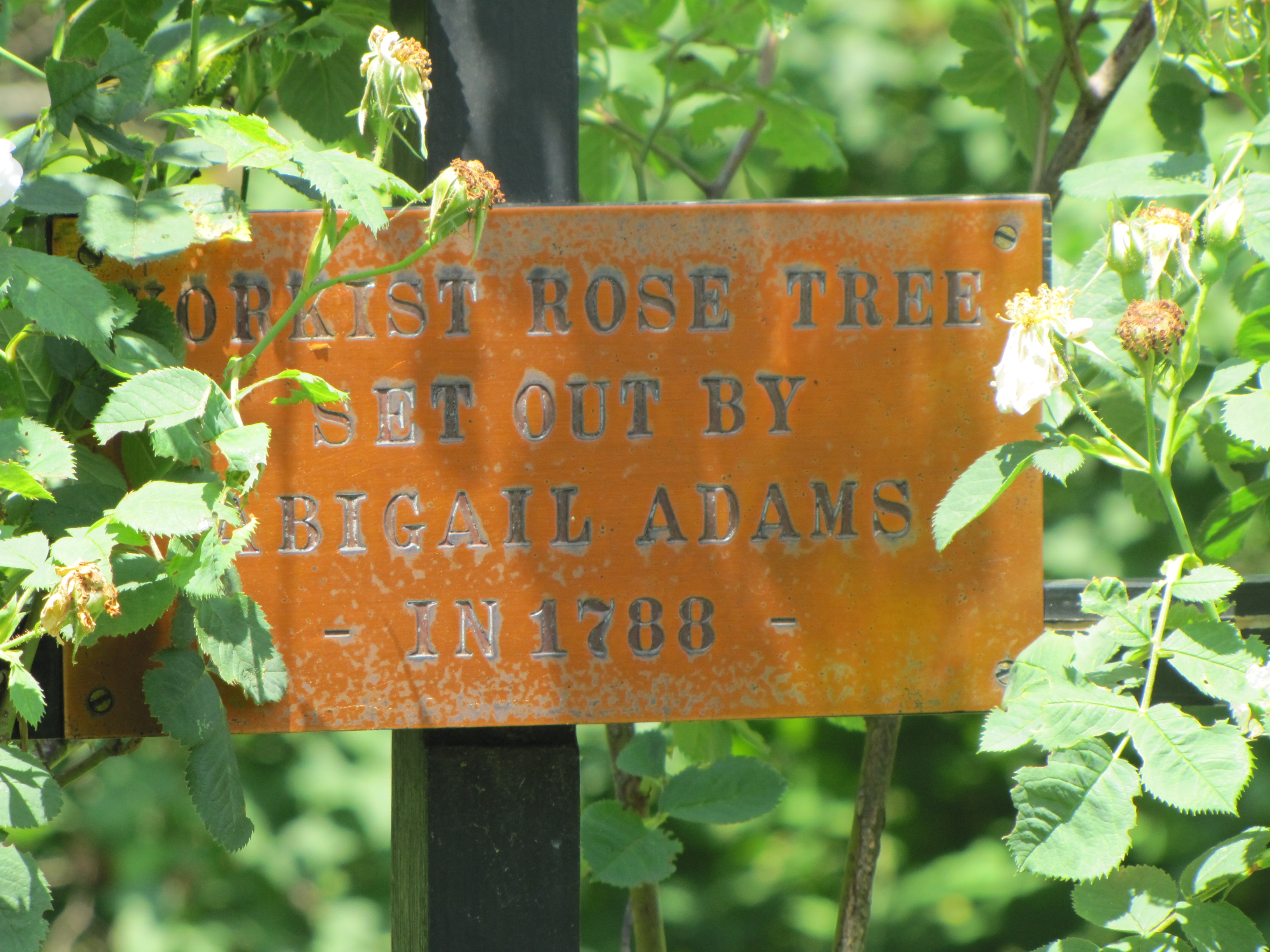
Yorkist Rose Tree set out by Abigail Adams in 1788
Samuel Gray. Samuel Maverick. James Caldwell. Crispus Attucks. Patrick Carr. Christopher Monk. These men would give their lives at the hands of British soldiers on the streets of Boston after an altercation on March 5, 1770. One was a rope maker. Two of these guys were 17 years young. Three of them would die on the spot, one the next day, one two weeks later, and the last 10 years down the road. You read about the Boston Massacre in textbooks, you hear about how it changed the course of history. Not until you read the names on the tombstones do you really understand. In your mind you wonder how you couldn’t have seen the significance. When you stand on the street where they were killed, that’s when you realize what they gave up. Most of you know by now that J and I appreciate walking around cemeteries. Some for the art, but always for the history. As we walked the grounds of the Granary Burying Ground (where these victims and other notable men and women are buried), we talked about who we saw there and what life must have been like for them. Getting to know the people that walked the ground before me always helps give me perspective to appreciate where I am and who sacrificed so that I could live free. Continue with me further down the Path…
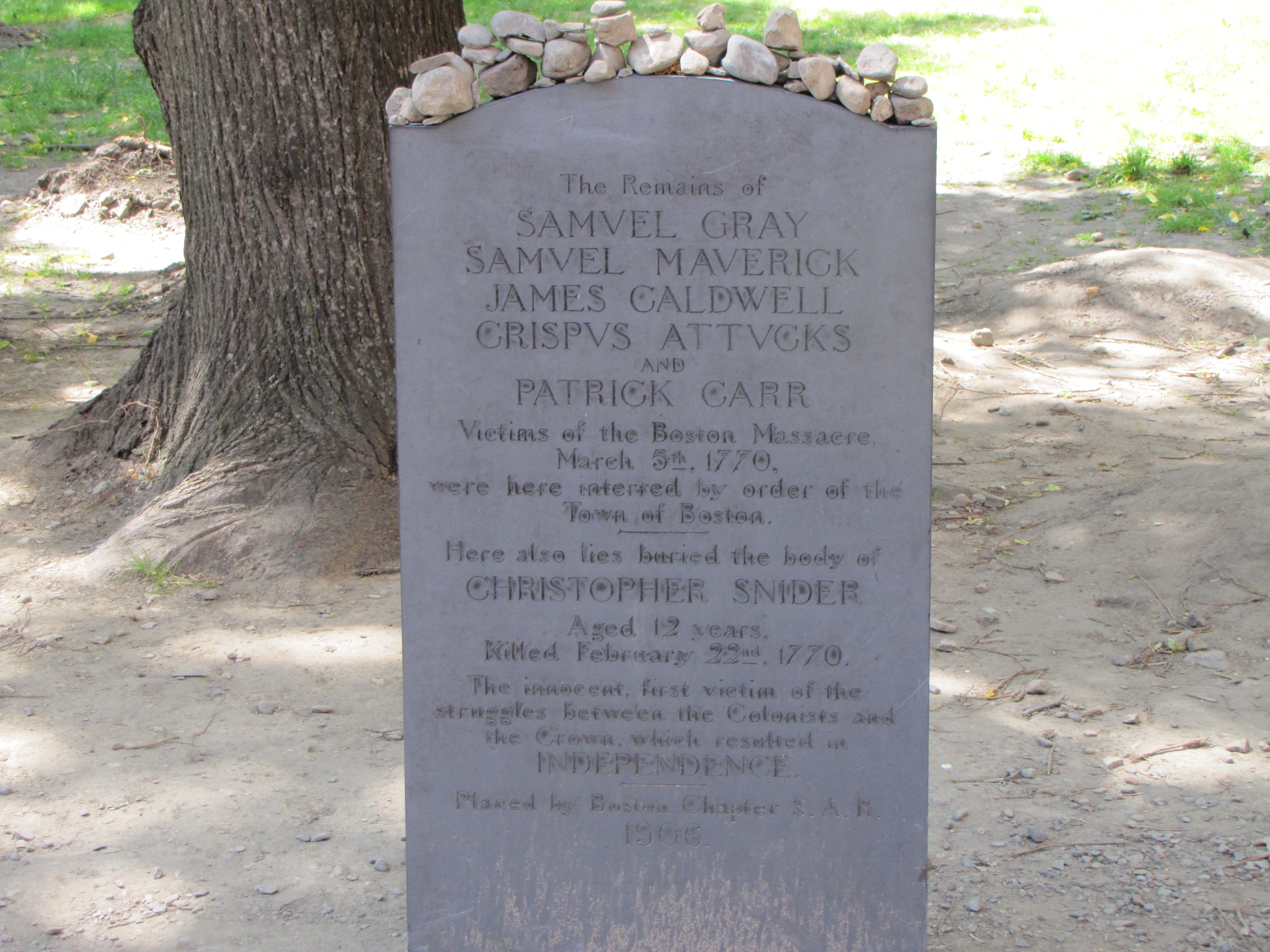
Grave marker for the first five victims of the Boston Massacre
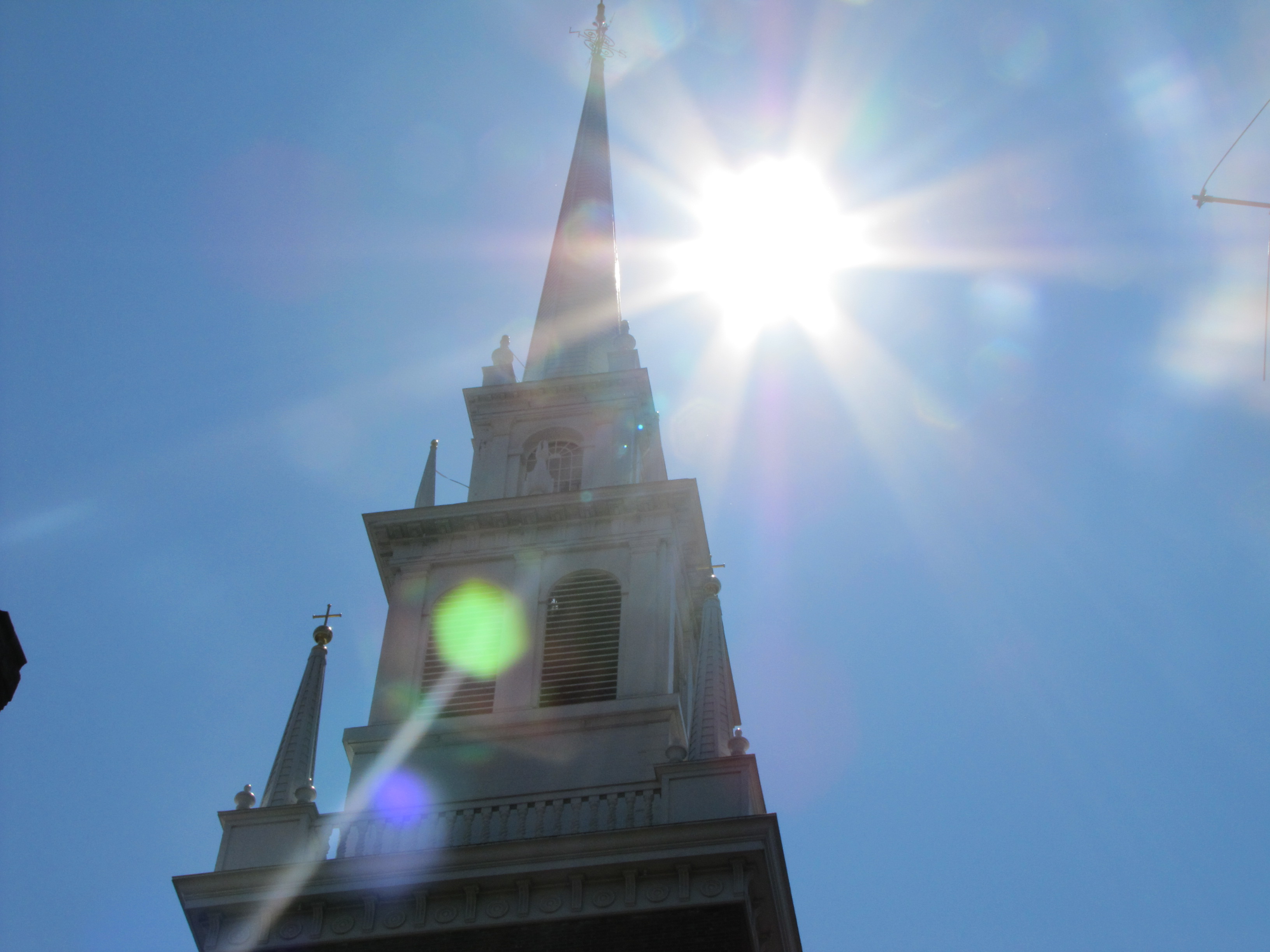
One if by land, two if by sea. A signal of the ages for Old North Church as part of Paul Revere’s famous ride April 18, 1775. The number of lanterns lit in the tower would signify how the British were moving toward Lexington and Concord. For those of you that might not know, Robert Newman climbed the tower with two lit lanterns. The signal stood only momentarily, but it was all that was necessary for the Patriots to know what it meant. When we approached the Church (officially called Christ Church in the city of Boston) with the sunlight meeting us just over the peak of the tower, I looked up and stared in awe. Here I was, standing at the base of one of the top 10 places in the U.S. that I wanted to see in my lifetime. I had done my research here and wanted to pay for the tour, visit the gift shop, spend some quality time examining all that I could, including the souvenirs. This was the symbol of freedom for me, and I was dying to get in. When we arrived at the front door however, J and I realized that we wouldn’t get that chance. As might befit a building of such significance (built in 1723), many schools in the area have arranged for graduations to take place here, and we had hit the Church on such a day. With kids coming out of the building and parents running up to meet them, I wasn’t going to let an opportunity pass to see such a place. I climbed up onto the side of the church and grabbed on to a window ledge, catching everything that I could, including my balance, as I just about fell through the window. After regaining my composure and not drawing attention to myself (miraculously), I was able to slide my camera through the open window and get a few pictures. I was disappointed that I couldn’t get in, but we ventured on…to the gift shop. Everything you want to know and don’t want to know about the Old North is in this little building just to the right of the church (if you’re facing it from the front). I bought my souvenirs and walked out. Here I was at one of the greatest points of freedom, at least symbolically in our nation’s history, and I couldn’t do anything more than peek in through the window. As I looked through the window the words of Henry Wadsworth Longfellow accurately touched on how I imagined Paul Revere’s ride would have gone…
“If the British march by land or sea from the town to-night,
Hang a lantern aloft in the belfry arch
Of the North Church tower as a signal light,–
One if by land, and two if by sea;
And I on the opposite shore will be,
Ready to ride and spread the alarm
Through every Middlesex village and farm,
For the country folk to be up and to arm.”
The kids who were graduating might not have realized their part in the story, just a sign of the changing times as they were welcomed to the next part of their lives, free from high school and ready to move on to another stage of life. In this case, with this building, freedom would mean something else, at least temporarily. I realized that freedom doesn’t ring as strongly as it once did. Marching down the Path…
Once an indoor pavilion, now a source for all types of fast food, Quincy Market was our next stop. Within the narrow halls are seemingly endless food choices, running the gamut from sausage and peppers, pizza, to gelato, and many other options that would not have been available when the vendors walked these halls in the late 1820s. J and I enjoyed some of the fare here (mmm waffle cone…) and sat back and watched the people. As I watched, I noticed that in this predominantly Irish-American city were people of all nations, colors, and tribes; all were well represented at the market. Not that you don’t expect to see that in a large modern metropolis, but in this place at that moment was a concentration of everything mixing together. Obviously, I know how I came to be at that place in time at exactly that moment; that at least 9 other generations had been born before me in this country to allow me to be where I was, was not lost on me. But, how many of these people had been here for 6 months? Had any just earned their citizenship? Some may have been here for 200 years, 10 years, 10 days, or 10 minutes, but they were all here. The Path was walked on by other people…
From our Declaration of Independence, these words were written, “We hold these truths to be self-evident, that all men are created equal, that they are endowed by their Creator with certain unalienable Rights, that among these are Life, Liberty and the pursuit of Happiness.” Tell that to Prince Estabrook. Actually, that wouldn’t have been necessary. This man understood that, and as a slave in the North, decided to fight as one of the Lexington Minute Men. He was wounded in the Battle of Lexington (not far from Buckman Tavern which has the original door from 1775 with a musket ball still in it…incredible). Estabrook would live to serve elsewhere throughout the Revolution. Once his time of service was complete, his master freed him because of his service to our country. But the Path is stained with the blood of many who were not so fortunate…
Imagine for a moment that you were born into a wealthy northern family. You have opportunities to be successful in everything that you do because you are educated and have a chance to pursue your wildest dreams. In the midst of your young life, the Civil War begins and you take up with the local New York militia and head off toward D.C. When your service is complete there, you join up with the 2nd Massachusetts, a division that sees one of the bloodiest days in American history at Antietam (Sharpsburg for you Southerners). An opportunity comes for Robert Gould Shaw to take the lead of an all-black regiment. After a pause, he takes the job. The men inspire Shaw to lead them on, and in the second battle for Fort Wagner, Morris Island, SC, he dies pleading with his Massachusetts 54th to charge forth toward the fort. Confederate General Johnson Hagood left Shaw’s body where it was. Hagood said of Shaw, “had he been in command of white troops, I should have given him an honorable burial; as it is, I shall bury him in the common trench with the negroes that fell with him.” Shaw’s father eventually said, “We would not have his body removed from where it lies surrounded by his brave and devoted soldiers…We can imagine no holier place than that in which he lies, among his brave and devoted followers, nor wish for him better company…” As J and I stood there at a monument honoring him in Boston, these thoughts crossed my mind…this guy gave up all social status to fight as an equal with other men, despite their color. These men fought along with him, died with him, and were buried right next to him. They fought for freedom together as one unit, not as men with skins of different colors. Shaw understood that…so did his parents…so did his men…so did his newlywed wife of two months that he left behind. The Path is straight and narrow, few take the walk…
As J and I finished our extensive and historic (pun-intended) week’s journey together, we ventured to a gem of a park, one of the oldest in the country of its kind. A park that has seen the likes of the Babe, Johnny Pesky, and Carlton Fisk’s pleading for the ball to go fair in the 1975 World Series. Fenway Park has seen its share of heroes, and new ones would emerge in 2004 , leading the Red Sox to their first title since they traded Babe Ruth to the Yankees (they would see further glory with another championship in 2007). We had seats in center field, were able to see the guy change the score manually between innings, and were briefly on television as a ground-rule double bounced right over our heads. What topped it all off though were the people that sat next to us. A father and son team enjoying the game, trying to get the best view of all of the Boston players. They spoke with a heavy Boston accent and probably lived in the area for generations. Those two were good for my spirit. Wicked good. It’s people like them that make America great, not for anything special that they were doing, but for being who they were, and nothing else (although the dad disappeared for a few innings mysteriously, but that’s another story). The Path today is free…
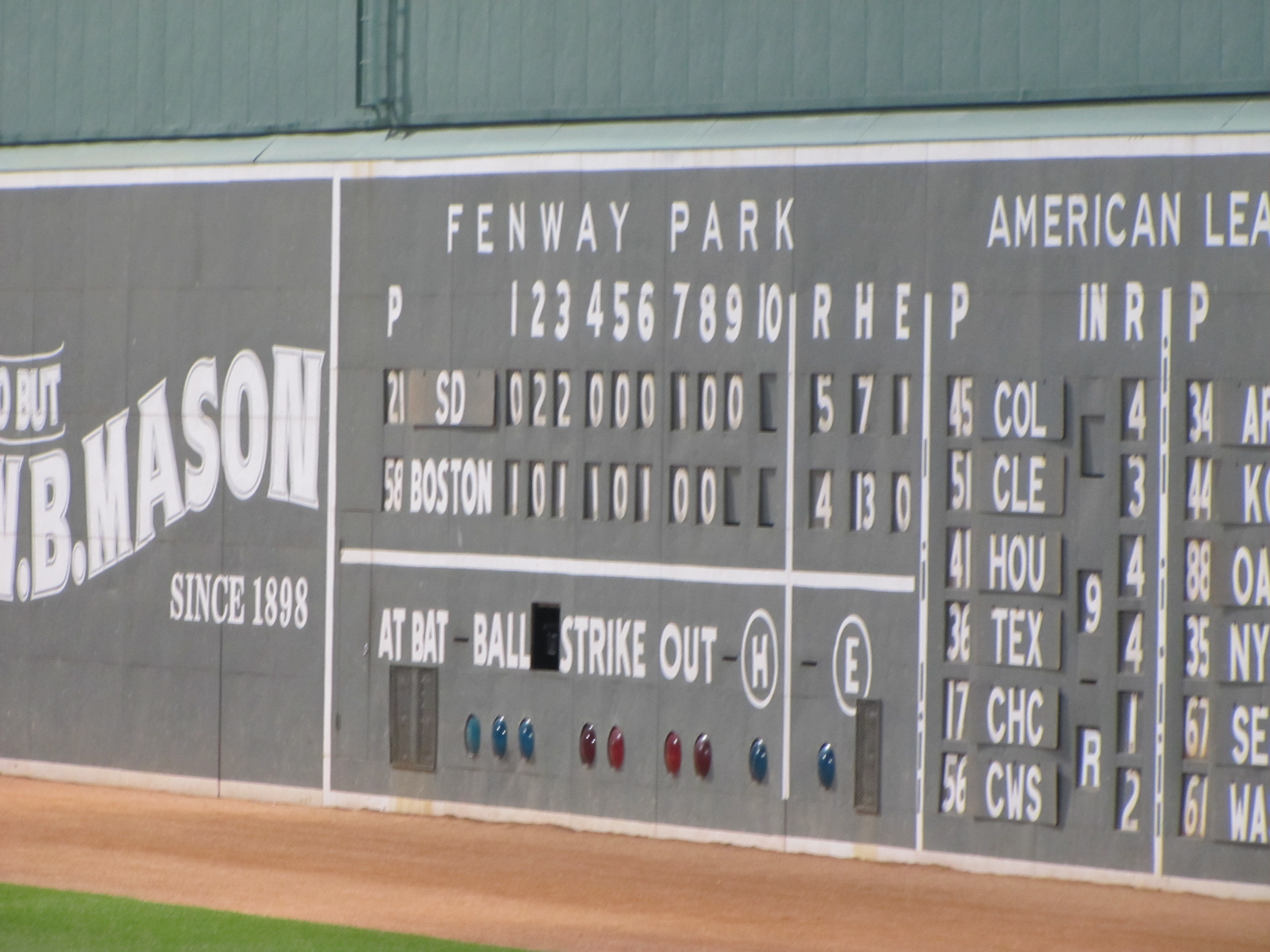
San Diego gets the win, 5-4.
I could have mentioned soooo many others on our walk along the Path to Freedom, but these few caught my eye on this journey in one part of our country, those that lived and died for our rights and freedoms. In today’s world, where we literally have everything at our fingertips, do we still think of those who walked the Path before us? Do you think about what makes America great? It’s great to be able to eat what we want and when, to have food delivered to our door, to worship where we want, and to live free. What really makes America great today is the people…you, me, your neighbors, your co-workers, bosses, friends, family, strangers, wealthy and poor, regardless of gender or skin color.
I love these United States of America, and to the Republic for which it stands, one nation, under God, indivisible, with Liberty and Justice for all! I have the chance to love this country because of those that walked before me. Thank you. Thank you. Thank you for my freedom. I may not have earned it myself, but I will not take it for granted, and I will do my best to carry it forward, further down the Path…
D
 Splintered Kernels
Amazingly written… and extremely touching!
Excellent post. I was checking constantly this blog and I’m impressed! Extremely helpful information particularly the last part 🙂 I care for such information much. I was seeking this certain info for a long time. Thank you and best of luck.
Yesterday i spent 300 $ for platinium roulette system , i hope
that i will earn my first cash online